


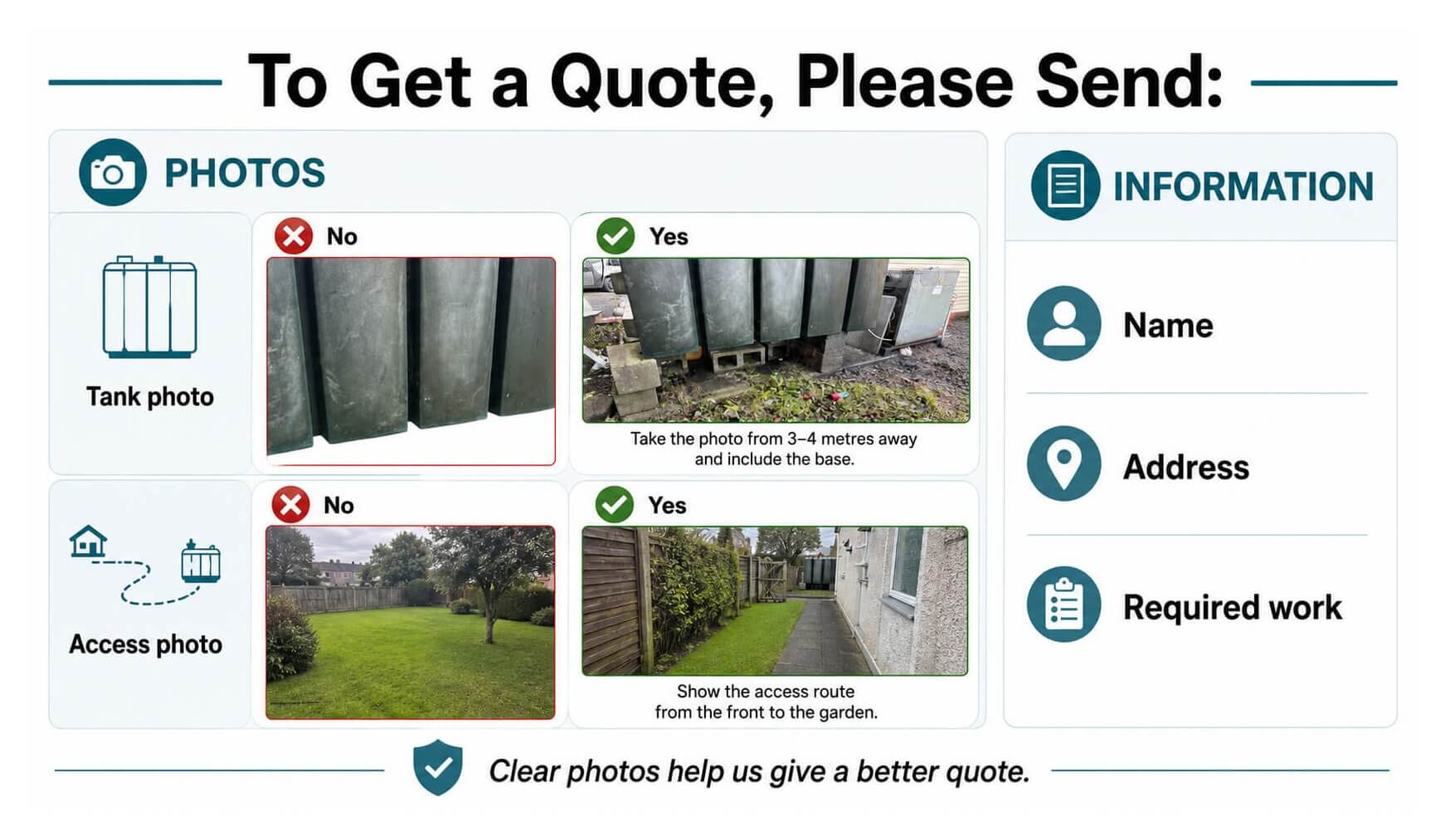
Most oil tank replacement quotes start with one simple thing: clear photos.
A few good photos can show the condition of the tank, the base, the pipework and the access route. That makes it easier to understand whether the job is straightforward or whether the site may need extra work.
For an oil tank replacement quote, send photos before booking or call Brian on 086 806 8776 or WhatsApp
Why photos matter before an oil tank replacement
An old oil tank can look simple from one angle and completely different from another.
The tank itself may be cracked, faded, bulging or leaking. The base may be too small, uneven or damaged. Access may be tight because of walls, fences, hedges, decking, sheds or narrow side entrances.
Photos help show these things early.
That means fewer surprises on the day and a clearer idea of what is involved before the work starts.
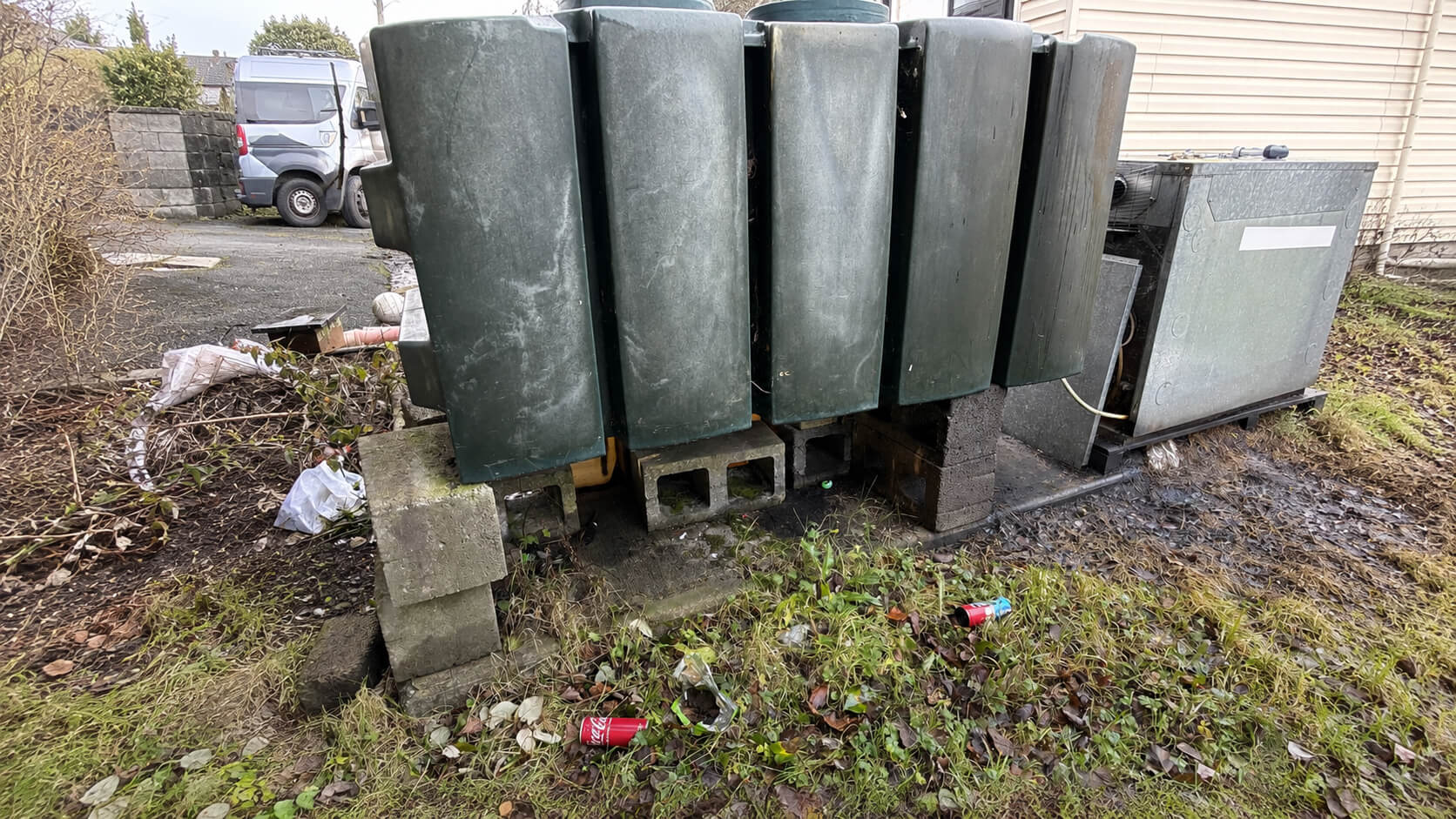
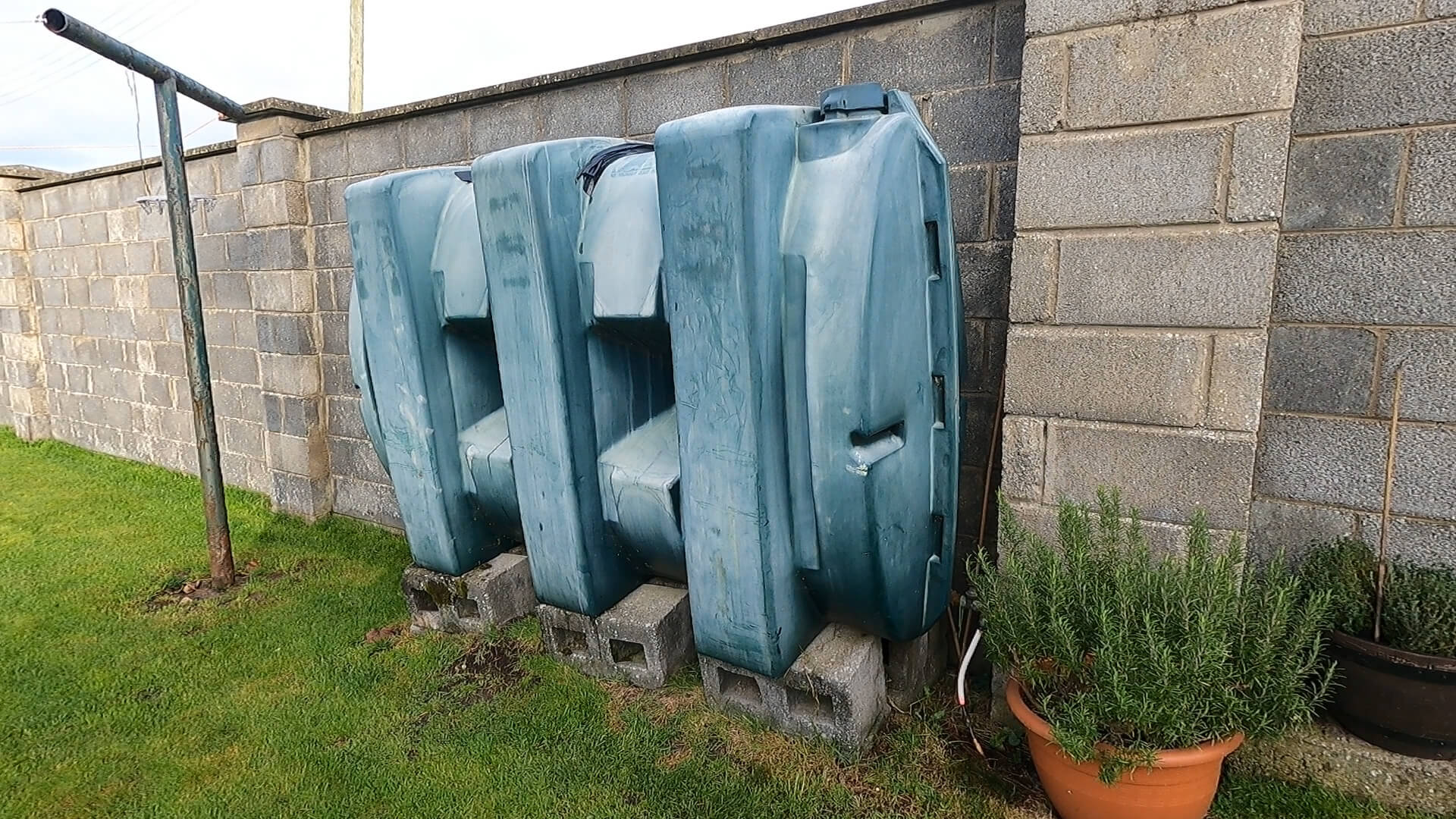
Photo 1: The full oil tank
Start with one clear photo of the full tank.
Stand back far enough to show the whole tank in one image. Include the space around it, not just the front face of the tank.
This photo helps show the tank size, shape, age, position and general condition.
Try to include nearby walls, fences, drains, hedges or garden structures if they are close to the tank.
Photo 2: The tank base
The base is one of the most important parts of the job.
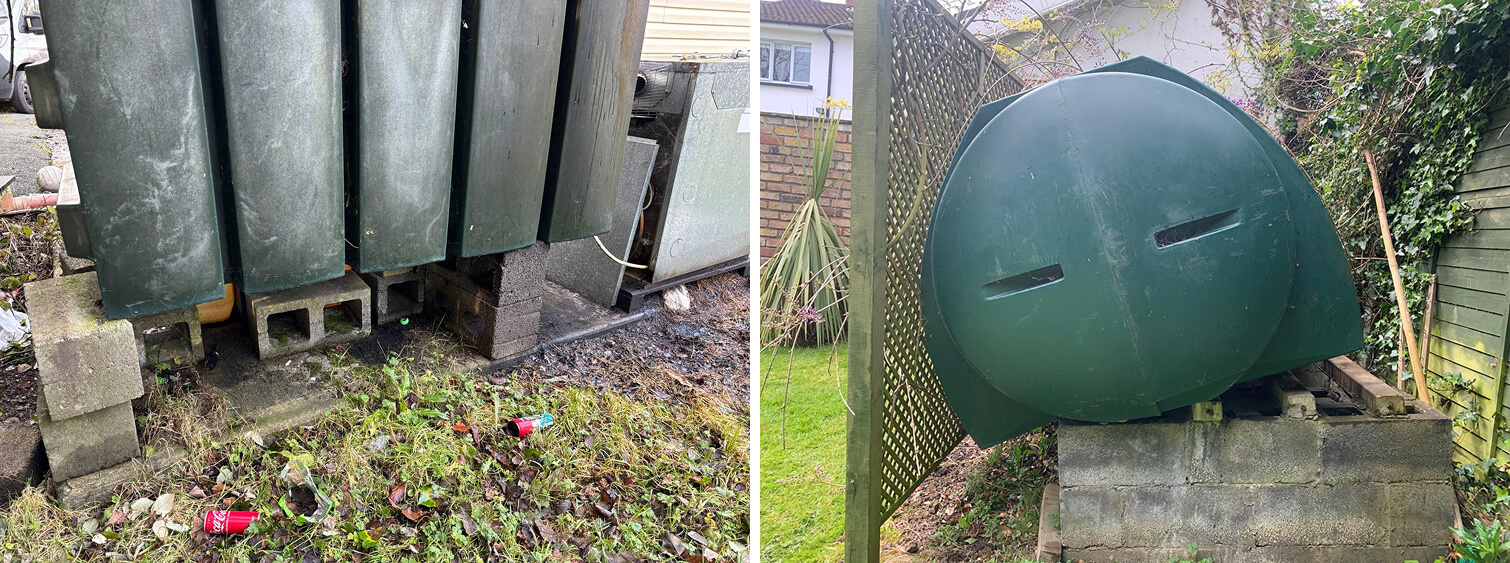
Take a photo showing what the tank is sitting on. This may be concrete, blocks, lintels, slabs, timber, steel or another support.
A poor base can cause tank movement, stress and early failure. If the base is uneven, cracked, too small or sinking, it may need attention before a new tank is installed.
For more detail, see oil tank base work.
Photo 3: The outlet and pipework
Take a close photo of the lower section where the pipework leaves the tank.
This helps show the valve, fittings, filter area and how the tank connects to the heating system.
Do not remove anything or interfere with the pipework. Just take a clear photo from a safe position.
This is especially useful if there is oil staining, corrosion, damaged fittings or signs of an old connection.
Photo 4: Access to the tank
Access affects the job.
Take one or two photos showing how the tank area is reached. This could be a side gate, garden path, narrow passage, driveway, steps or back garden route.
If the old tank needs to be removed through a tight space, that needs to be known in advance.
Good access photos help show whether removal and installation will be straightforward or whether extra planning may be needed.
Photo 5: Any cracks, leaks or damage
If you can see a problem, photograph it clearly.
Useful photos include:
- cracks
- splits
- bulging
- oil staining
- wet patches
- faded or brittle plastic
- movement on the base
- damaged pipework
- tank leaning to one side
Do not touch a leaking or damaged tank unnecessarily. Take the photo from a safe distance if needed.
What not to send
Avoid sending only one close-up photo.
A close-up of a crack or label is useful, but it does not show the full job. The full tank, base, pipework and access are usually more important for understanding the work.
Also avoid dark, blurry photos or photos taken too close to the tank. Step back and show the area properly.
Will photos give an exact price?
Photos help, but they do not always show everything.
The final cost can depend on the tank size, tank type, oil remaining, base condition, access, pipework and whether the old tank needs disposal.
Photos are still the best first step because they show whether the job looks straightforward or whether the site may need more work.
What services can be assessed from photos?
Photos can help with:
The clearer the photos, the easier it is to advise.
Simple photo checklist before you call
Send clear photos of:
- the full oil tank
- the base under the tank
- the outlet and pipework
- the access route
- any visible cracks, staining, bulging or damage
For advice, call Brian on 086 806 8776.