

Most homeowners have the same concern before booking an oil tank replacement: what happens to the oil already in the old tank?
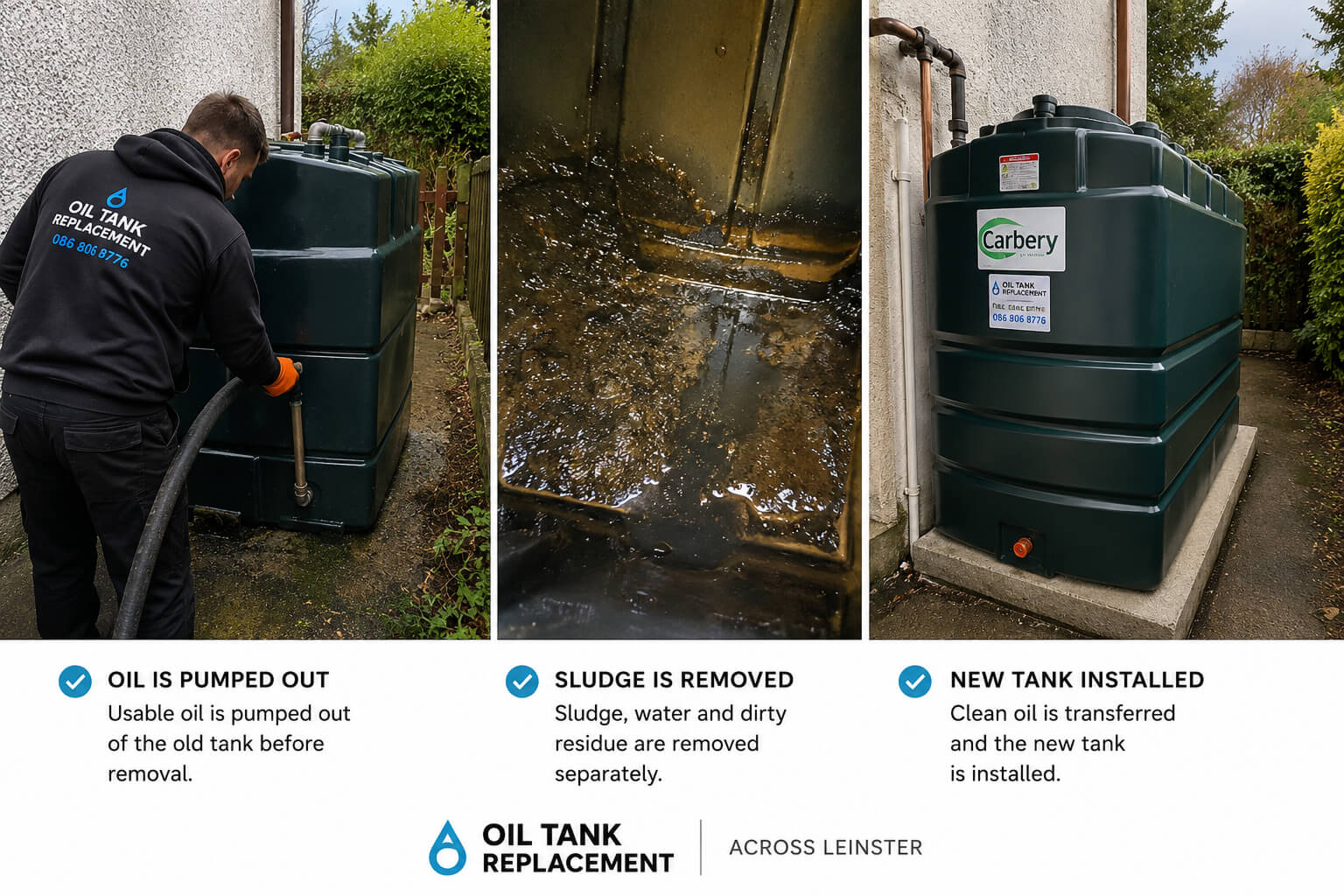
The answer is usually straightforward. Good heating oil is pumped out and transferred where suitable. Sludge, water and dirty residue from the bottom of the old tank are kept separate and removed properly.
That matters because clean oil can usually be reused. Dirty residue should not be put into a new tank.
Will you lose the oil in your old tank?
Not usually.
If the oil is clean and suitable for transfer, it can normally be pumped out before the old tank is removed. It may be held safely in temporary containers while the replacement work is carried out.
Once the new tank is installed and ready, the clean oil can be transferred back where suitable.
The aim is simple: keep usable heating oil and avoid wasting what can still be used.
Why dirty sludge should not go into a new tank
Older tanks often collect dirt at the bottom.
This can include thick black sludge, water from condensation, old sediment and contaminated oil from the lowest part of the tank. It is not the same as clean heating oil.
Putting this back into a new tank can cause problems later. Sludge can block filters. Water can affect the heating system. Dirt can restrict oil flow.
This is why clean oil and dirty bottom residue are handled separately during proper domestic oil tank replacement.
What can be found at the bottom of an old oil tank?
The bottom of an old tank often tells the real story.
From the outside, the tank may only look faded or worn. Inside, there may be years of sludge, water and residue sitting below the usable oil.
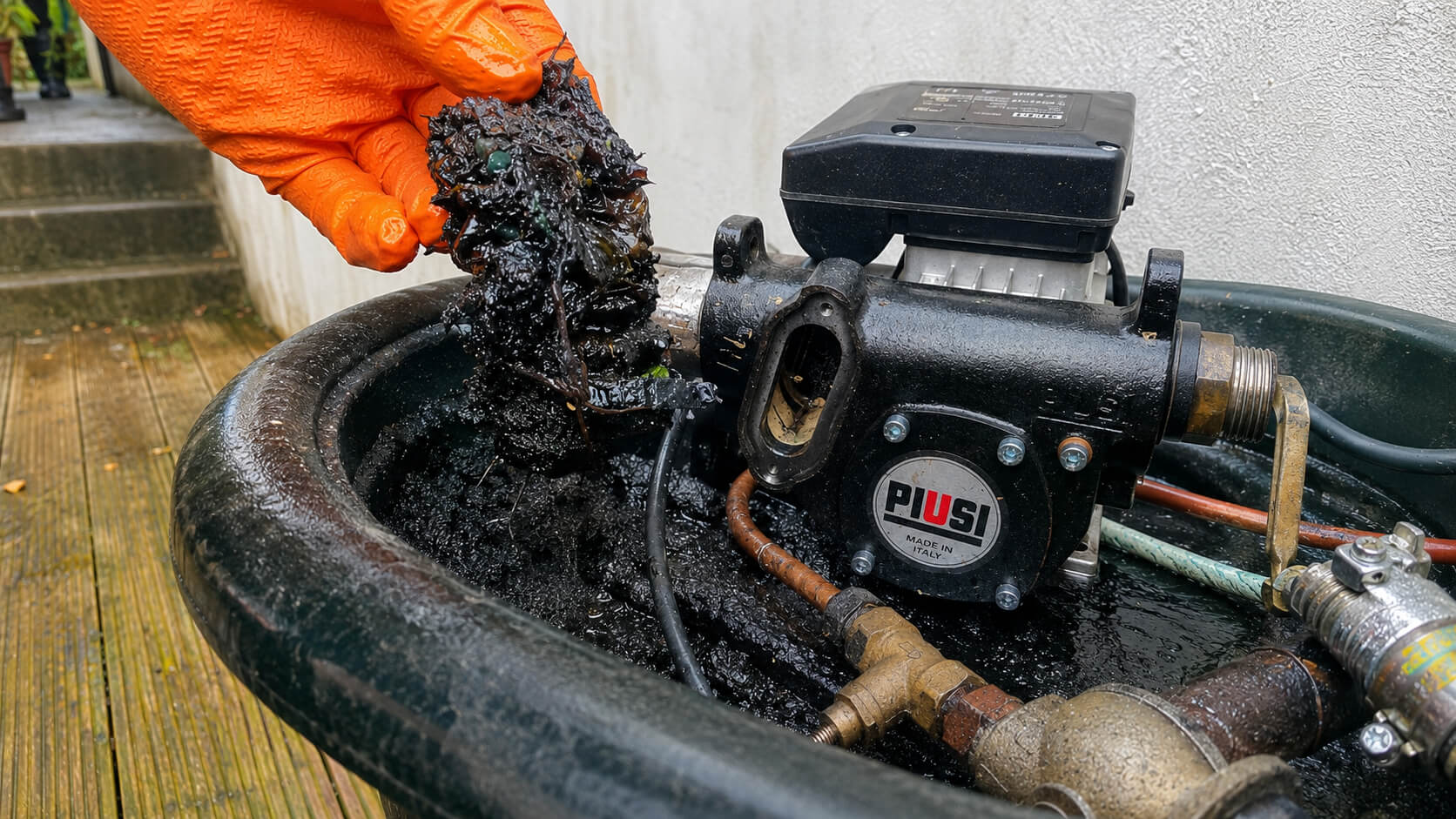
Common findings include:
- thick black sludge
- water
- sediment
- dirt particles
- contaminated oil
- residue from years of use
This is also why tank cleaning is useful in some situations, but it does not solve every problem. If the tank is cracked, bulging, leaking or sitting on a poor base, replacement is usually the better route.
Why oil transfer matters for the heating system
The oil in the tank feeds the heating system, so the quality of that oil matters.
Clean oil helps the system run properly. Dirty oil can create avoidable issues with filters, pipework and oil flow.
During replacement, the usable oil is treated differently from sludge and contaminated residue. That separation helps protect the new tank and the heating supply after the work is finished.
What happens during the replacement?
The exact process depends on the property, access and tank condition.
In a normal replacement, the old tank is checked first. Usable oil is pumped out. Sludge and dirty residue are separated. The old tank is removed. The oil tank base is checked or prepared. The new tank is installed, and clean oil is transferred back where suitable.
That is why oil tank replacement is not just about swapping one tank for another. The oil, base, access, pipework and disposal all matter.
Why the tank base should be checked at the same time
A new tank needs proper support.
If the old base is too small, uneven, cracked or unstable, it can put stress on the new tank. Over time, that can lead to movement, distortion or early failure.
This is why the base should be checked before the new tank is fitted. A sound base gives the new tank a better working life and helps avoid problems later.
For raised, damaged or unsuitable supports, see oil tank base work.
What happens to the old tank?
The old tank is removed from site as part of the job where agreed.
It is not useful to leave an old, contaminated tank sitting in the garden. Once the oil and residue are handled, the old tank can be taken away for proper disposal.
For tanks no longer needed, see oil tank removal.
When should an old oil tank be replaced?
An old oil tank should be checked if you notice cracking, bulging, staining, leaks, fading or movement on the base.
It should also be checked before a large oil delivery if the tank looks tired. A full tank adds weight and pressure, which can expose weaknesses that were not obvious before.
It is usually better to deal with an ageing tank before it becomes a leak.
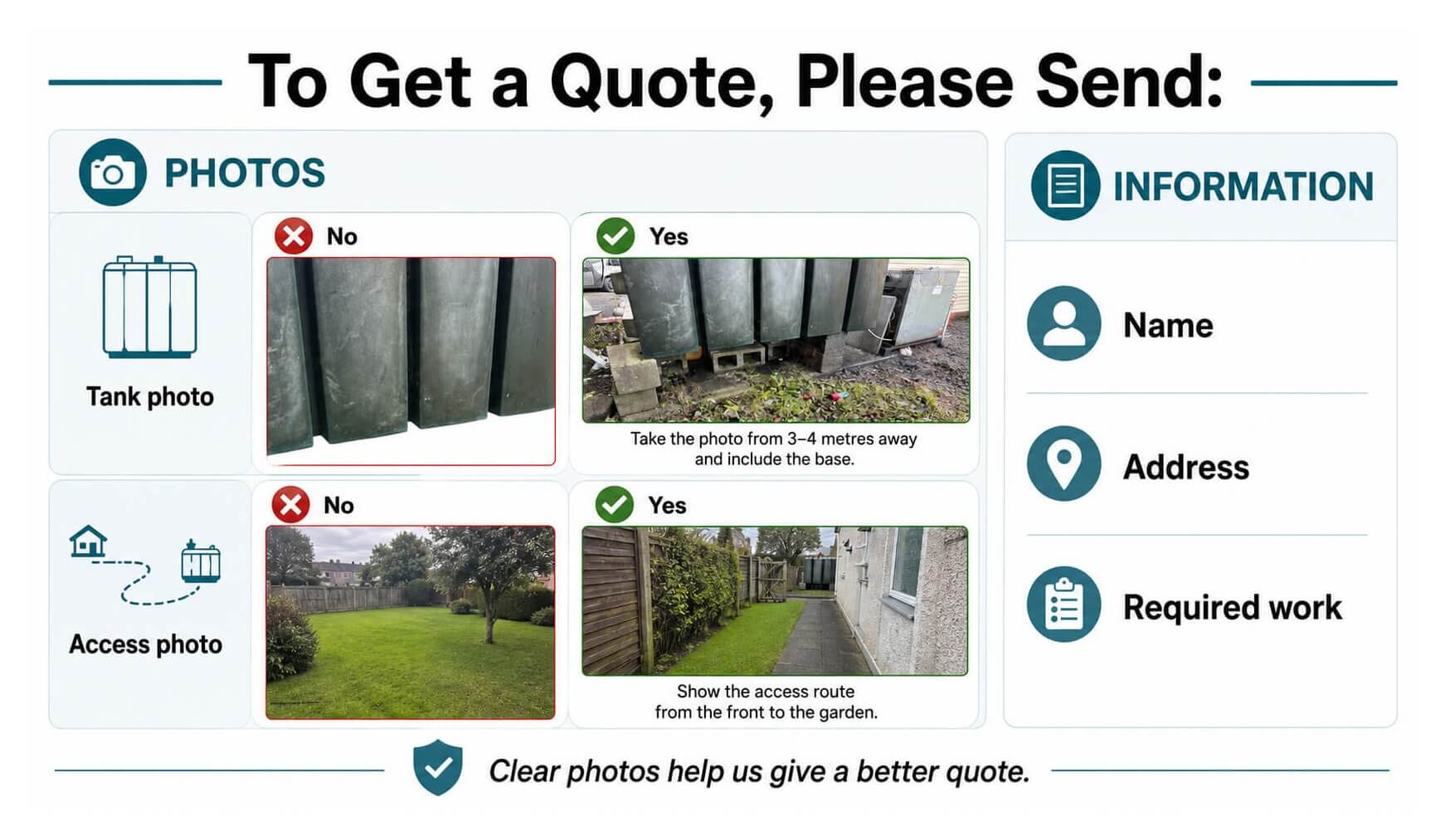
Send photos before booking
Clear photos make it easier to assess the job before arrival.
Useful photos include the full tank, the base, the outlet and pipework area, and the access route. If there are visible cracks, staining, bulging or signs of movement, include those too.
For advice, call Brian on 086 806 8776.
Oil Tank Replacement provides oil tank services across Leinster, including Dublin, Meath, Kildare, Wicklow and Louth.