


Replacing an old oil tank is not finished when the new tank is fitted.
The old tank still has to be emptied, handled and removed properly. In many domestic jobs, this is the part homeowners worry about: will the old tank be left in the garden, do they need a skip, and what happens to the oil and dirty residue inside it?
With a proper oil tank replacement, old tank removal and disposal can be included as part of the job.
For oil tank replacement across Leinster, call Brian on 086 806 8776.
Why old tank disposal matters
An old oil tank is not just a large piece of plastic.
It may still contain oil, sludge, water or dirty residue at the bottom. Even when the usable oil has been pumped out, the tank still needs to be handled carefully.
Leaving an old tank beside the house or at the back of the garden is not a proper finish. It creates clutter, can smell of oil and may still contain contaminated residue.
That is why old tank removal should be part of the replacement plan from the start.
What happens before the old tank is removed?
Before the old tank is taken away, the oil inside it has to be dealt with.
If the oil is clean and suitable for transfer, it can usually be pumped out and held safely during the job. Sludge, water and dirty residue from the bottom of the tank are kept separate.
This protects the new tank and the heating system.
For more detail, read what happens to the oil during oil tank replacement.
The old tank is removed after the oil is handled
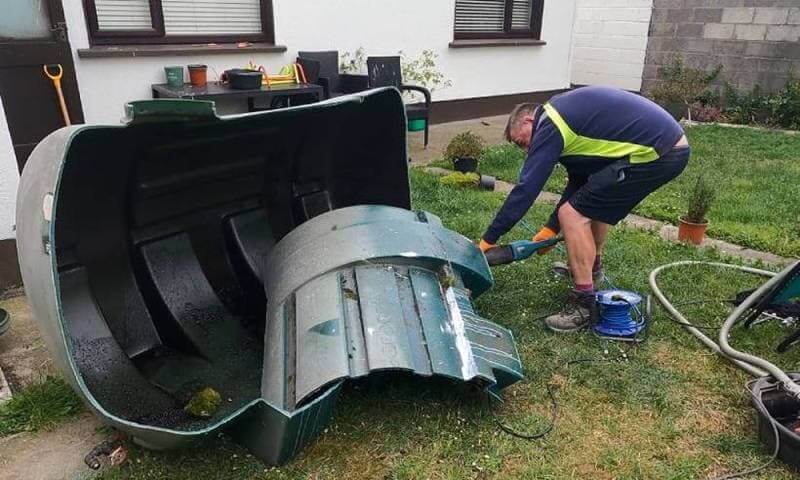
Once the usable oil and dirty residue have been dealt with, the old tank can be removed from its position.
This may be straightforward if there is good access. It can be more awkward if the tank is behind a wall, hedge, shed, decking or narrow side entrance.
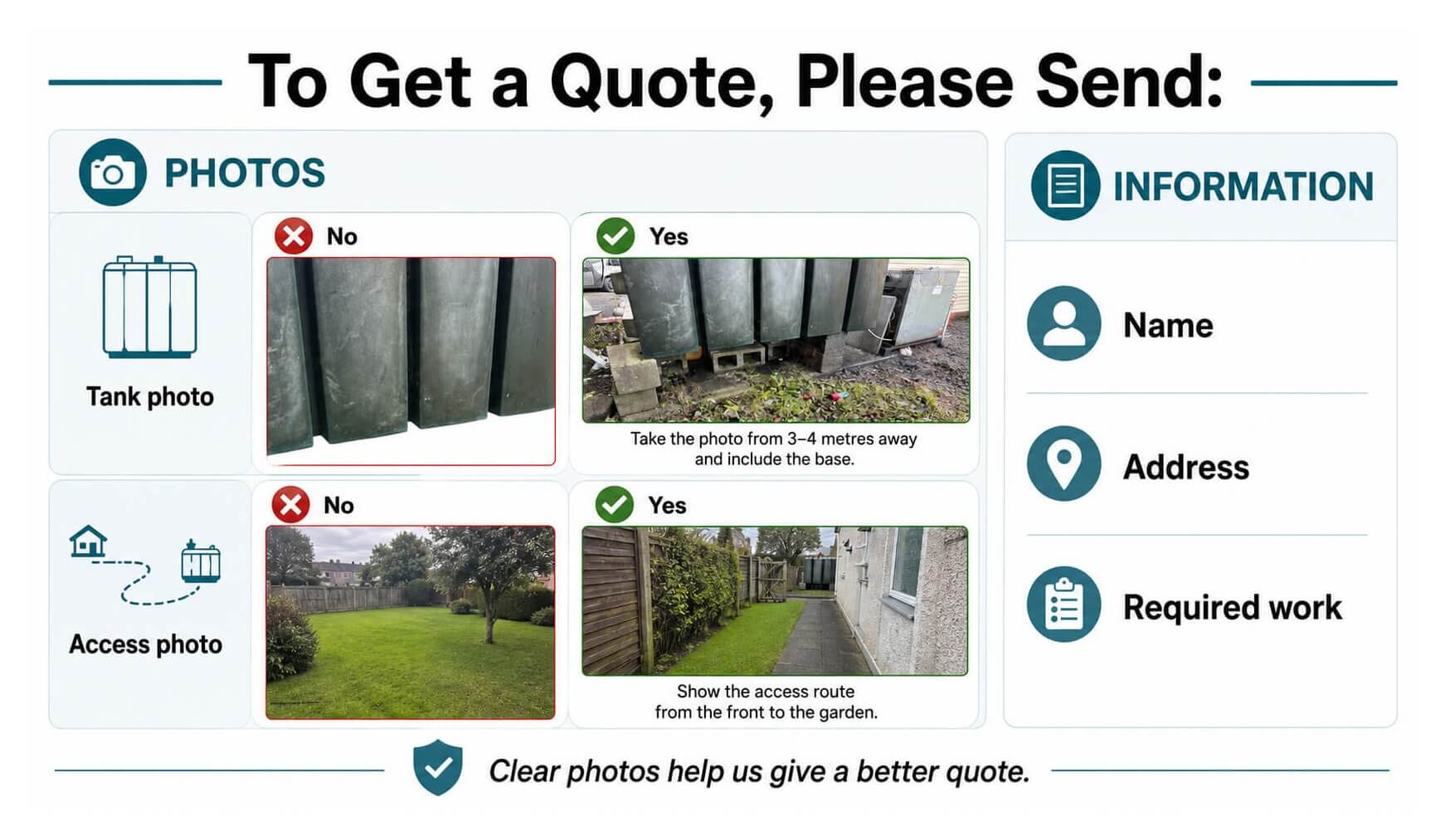
That is why photos are useful before the job. They show the tank, base and access route before arrival.
For tanks that are no longer needed, see oil tank removal.
What makes old tank removal more difficult?
Some old tanks are simple to remove. Others need more planning.
Common issues include:
- narrow side access
- raised bases
- tanks close to walls or fences
- overgrown garden areas
- sheds, decking or steps beside the tank
- old pipework
- heavy residue left inside the tank
- poor base support
- restricted working space
None of these automatically stops the work. They just need to be known before the job starts.
Why the base should be checked at the same time
When the old tank is removed, the base becomes easier to inspect.
This is often where the real problem shows up. The tank may have been sitting on old blocks, a cracked slab, timber supports or an uneven surface.
A new tank should not be fitted onto a weak or unsuitable base.
The base should be level, solid and suitable for the new tank footprint. If it is not, it may need to be repaired or replaced before the new tank is installed.
For base work, see oil tank base services.
New tank fitted after the old tank is removed
Once the old tank is out and the base is ready, the new tank can be installed.
The correct tank depends on the property, access, tank position and storage needs. Some domestic homes may suit a single skin tank. Others may need or benefit from a bunded tank.
The new tank should be installed with proper support, suitable connections and a clean transfer of usable oil where appropriate.
For tank options, see new oil tanks.
Old tank disposal avoids a second job
If disposal is not included, the homeowner can be left with a problem.
The new tank may be fitted, but the old one is still there. That means a second call, extra handling and more time wasted.
Including old tank removal as part of the replacement keeps the job cleaner and simpler.
One visit. Old tank out. New tank fitted. Site left more practical.
Can an old tank be removed without replacing it?
Yes.
Some homeowners need oil tank removal only. This may be after switching heating systems, clearing a garden, selling a property or removing an unused tank.
In that case, the tank still needs to be checked, emptied where needed and removed safely.
If the tank is still in use, replacement may be the better route.
Can cleaning solve the problem instead?
Sometimes tank cleaning helps, especially where sludge or dirty residue is the main issue.
But cleaning does not fix a cracked, leaking, bulging or unstable tank. It also does not fix a poor base.
If the tank body is failing, replacement is the better answer.
When should you replace the old tank instead of just removing it?
Replacement is usually needed when the oil tank is still feeding the heating system and shows signs of age or risk.
Warning signs include:
- cracks
- leaks
- bulging
- oil staining
- faded or brittle plastic
- poor base support
- unstable pipework
- movement or leaning
- visible wear around the outlet
If the tank is still being used, removal alone is not enough. A new tank needs to be fitted correctly.
Send photos before booking
Clear photos help show what is involved before the job is arranged.
Send photos of:
- the full tank
- the base
- outlet and pipework
- access route
- any cracks, staining, bulging or leaks
- nearby walls, fences, sheds or decking
This helps assess the replacement, removal and disposal work more accurately.
For advice, call Brian on 086 806 8776.
Oil tank replacement and disposal across Leinster
Oil Tank Replacement provides domestic and commercial oil tank services across Leinster, including Dublin, Meath, Kildare, Wicklow and Louth.
If your old tank needs replacing and removing from site, call Brian on 086 806 8776 or visit https://oiltankreplacement.ie.